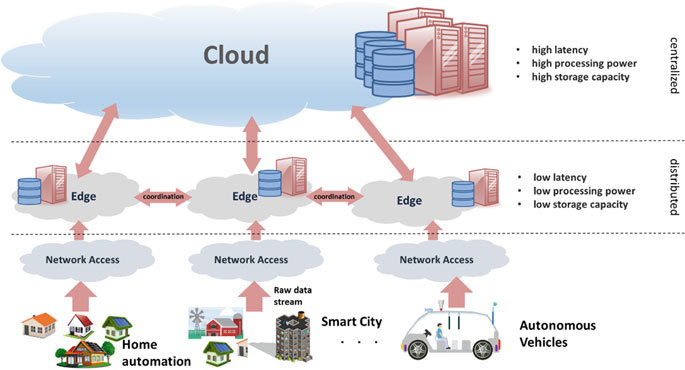
**Why Edge Computing in Autonomous Vehicles Is Taking Center Stage in the US Markets** What if every car on the road processed data in real time—no delay, no wait—just smarter, faster decisions at the edge? That’s the quiet revolution reshaping the future of autonomous vehicles across the United States. Edge computing in autonomous vehicles is transforming how vehicles sense, react, and learn, bringing self-driving technology closer to reliable, everyday use. With smarter data processing closer to the source, latency shrinks and safety improves—right when consumers, regulators, and tech leaders are calling for smarter mobility. As urban congestion rises and connected infrastructure expands, the demand for instant decision-making grows. Edge computing handles critical data locally within the vehicle or at nearby roadside hubs, minimizing reliance on distant cloud servers and enabling split-second responses essential for safety and efficiency. This shift isn’t science fiction—it’s a rapid evolution already being shaped by real-world challenges and technological progress. Understanding how this technology works, its current impact, and realistic opportunities helps clarify why edge computing in autonomous vehicles is emerging as a defining trend in smart transportation. **How Edge Computing in Autonomous Vehicles Actually Works**
Autonomous vehicles rely on thousands of data points per second. Edge computing filters and prioritizes critical inputs—like detecting a pedestrian stepping into the crosswalk or a sudden brake ahead—and activates immediate actions without waiting for cloud-based compute. This local processing also enhances privacy by keeping sensitive information on the vehicle, aligning with growing consumer demand for secure, responsive systems. The architecture often includes a layered approach: sensors capture data, onboard processors perform initial analysis, and selectively shared insights send only essential summaries to nearby edge networks or manufacturers. This balance between autonomy and connectivity optimizes both safety and scalability across vehicle fleets. **Common Questions About Edge Computing in Autonomous Vehicles** **Q: How is edge computing different from full cloud processing?** A: Edge computing processes data locally or at nearby edge nodes, minimizing delay and bandwidth use, while cloud computing handles large-scale analytics, updates, and model training. Together, they create a responsive and scalable system—edge for real-time decisions, cloud for continuous learning and improvement. **Q: Does edge computing improve vehicle safety?** A: Yes. By enabling near-instant analysis of surroundings, edge systems reduce reaction times to hazards, supporting features like automatic emergency braking and blind-spot awareness—critical for preventing accidents. **Q: Is edge computing secure?** A: Data processed locally limits exposure, reducing risks tied to transmitting sensitive vehicle or user information over public networks. This aligns with security expectations in increasingly digital mobility. **Opportunities and Realistic Expectations** Edge computing is unlocking new potential for autonomous vehicles across multiple use cases. Fleet operators benefit from streamlined operations, lower bandwidth costs, and consistent performance in low-connectivity areas. Urban planners explore how edge-powered vehicles can integrate with smart infrastructure—traffic lights, path prioritization, incident alerts—to boost efficiency citywide. For regulatory bodies, localized data processing supports compliance with privacy laws and accountability standards. Yet challenges remain. Deploying edge infrastructure at scale demands robust hardware, evolving standards, and coordination between manufacturers, cities, and network providers. Still, the trajectory is clear: edge computing enhances reliability, responsiveness, and safety—key pillars in bringing autonomous driving toward broader adoption. **Addressing Common Misconceptions** A frequent myth is that edge computing in vehicles replaces cloud connectivity entirely. In reality, the two models work together. Modern systems preserve seamless cloud access for map updates, software tuning, and deep-learning model improvements without compromising real-time performance. Another misunderstanding is that edge processing eliminates all data transfer—rather, it minimizes it to only necessary intelligence, preserving bandwidth and security. These systems are also designed with redundancy, ensuring vehicles maintain basic functioning even when network links are unstable. Far from being a “quick fix,” edge computing in autonomous vehicles is an integrated, evolving layer inside a layered architecture—built for safety, scalability, and trust. **Who Edge Computing in Autonomous Vehicles May Be Relevant For** Edge computing touches various stakeholders deeply. Fleet managers leverage local processing to improve operational efficiency and vehicle uptime. Manufacturers use edge data for continuous improvement in vehicle intelligence and over-the-air updates. Urban centers benefit from smarter traffic coordination, supporting safer, more adaptive public infrastructure. Even insurance models are shifting, using edge-derived cause analysis for more accurate risk assessment. This technology isn’t limited to full self-driving vehicles; it supports advanced driver-assistance systems (ADAS) across all autonomy levels, making driving safer for everyone on the road.
A frequent myth is that edge computing in vehicles replaces cloud connectivity entirely. In reality, the two models work together. Modern systems preserve seamless cloud access for map updates, software tuning, and deep-learning model improvements without compromising real-time performance. Another misunderstanding is that edge processing eliminates all data transfer—rather, it minimizes it to only necessary intelligence, preserving bandwidth and security. These systems are also designed with redundancy, ensuring vehicles maintain basic functioning even when network links are unstable. Far from being a “quick fix,” edge computing in autonomous vehicles is an integrated, evolving layer inside a layered architecture—built for safety, scalability, and trust. **Who Edge Computing in Autonomous Vehicles May Be Relevant For** Edge computing touches various stakeholders deeply. Fleet managers leverage local processing to improve operational efficiency and vehicle uptime. Manufacturers use edge data for continuous improvement in vehicle intelligence and over-the-air updates. Urban centers benefit from smarter traffic coordination, supporting safer, more adaptive public infrastructure. Even insurance models are shifting, using edge-derived cause analysis for more accurate risk assessment. This technology isn’t limited to full self-driving vehicles; it supports advanced driver-assistance systems (ADAS) across all autonomy levels, making driving safer for everyone on the road. **A Soft Invitation to Explore the Future** As edge computing continues to shape how vehicles sense, think, and react, staying informed opens doors to smarter, safer travel. This quiet evolution isn’t about flashy headlines—it’s about building trust through reliability and real-world impact. Whether tracking infrastructure progress, exploring implementation challenges, or considering how autonomous tech affects your daily commute, understanding edge computing offers valuable clarity. Stay curious, stay informed. The future of mobility is being built—one edge at a time.
**A Soft Invitation to Explore the Future** As edge computing continues to shape how vehicles sense, think, and react, staying informed opens doors to smarter, safer travel. This quiet evolution isn’t about flashy headlines—it’s about building trust through reliability and real-world impact. Whether tracking infrastructure progress, exploring implementation challenges, or considering how autonomous tech affects your daily commute, understanding edge computing offers valuable clarity. Stay curious, stay informed. The future of mobility is being built—one edge at a time.
You’re Not Preparing for Zum—This Rewires Your Entire Worldview
You Said You Avoid Zohan—Then This Shocking Truth Will Blow Your Mind
Stop Watching — The Xylophone Audio Trick Is Unstoppable and Pure Genius
