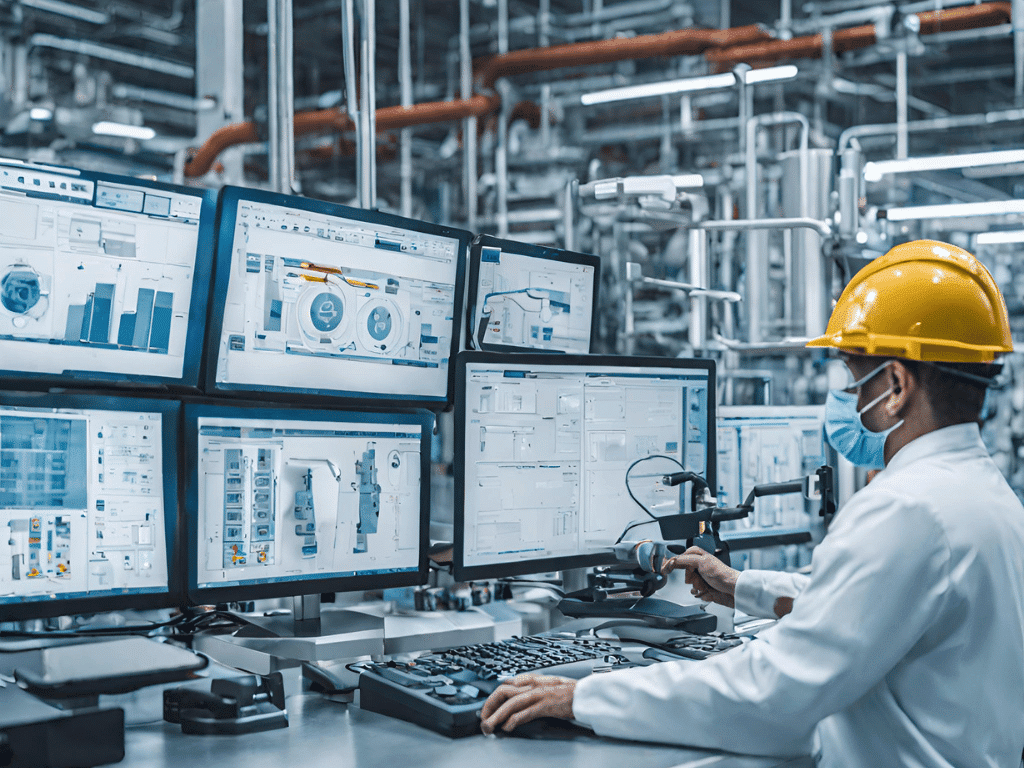
**1. Why Everyone’s Talking About Digital Twin in Manufacturing** In an era where Industry 4.0 is transforming how goods are designed, produced, and maintained, the digital twin in manufacturing has emerged as a cornerstone of next-level production intelligence. Companies across the US are increasingly integrating virtual replicas of physical systems to boost efficiency, reduce downtime, and predict outcomes before real-world impact. With smarter factories becoming the new standard, this technology is shifting from a futuristic concept to a practical necessity. **2. Driving Toward the Future: Why Digital Twin in Manufacturing Matters Now** Several converging trends fuel the growing attention to digital twin in manufacturing. Amid rising global competition and persistent supply chain challenges, businesses seek smarter ways to optimize operations. The need for faster decision-making, real-time monitoring, and predictive maintenance aligns perfectly with the capabilities of digital twin technology. Add to this a push for sustainability and operational resilience, and it’s clear why industry leaders are turning to digital twins as a tool to gain deeper insight and control over complex production environments. At its core, a digital twin in manufacturing creates a dynamic virtual model of a physical asset, system, or process—continuously updated with real-time data from sensors, machines, and operational feeds. This synchronized mirror allows engineers, planners, and managers to test scenarios, diagnose issues, and refine workflows without disrupting live operations. It’s an ecosystem where digital and physical worlds converge to drive smarter manufacturing. **3. How Digital Twin in Manufacturing Actually Works** A digital twin begins as a detailed 3D representation linked to actual machinery or production lines. Sensors embedded in equipment collect data on temperature, pressure, performance, and wear, streaming this information into the digital environment. Using advanced analytics and simulation models, the twin mirrors real-time conditions, forecasts behavior, and supports what-if analysis. When a machine shows unusual vibration patterns, the twin can simulate how that change might affect output or safety—and alert operators before a failure occurs. This continuous feedback loop helps bridge visibility gaps and enables proactive intervention. **4. Common Questions About Digital Twin in Manufacturing**
**Can digital twins be integrated with existing systems?** Yes. Most modern composites are designed to interface with ERP, MES, and SCADA platforms, allowing seamless data exchange without replacing legacy equipment. **What industries benefit most from digital twin adoption?** Automotive, aerospace, consumer goods, and heavy machinery sectors are among the leaders, but adopters span healthcare manufacturing, energy, and smart infrastructure as well. **Is digital twin technology only for large manufacturers?** No. Scalable solutions now enable small and mid-sized firms to implement digital twins through cloud-based platforms, lowering entry barriers significantly. **5. Opportunities and Considerations** Adopting digital twin in manufacturing unlocks powerful benefits: improved prediction of maintenance needs, reduced waste through optimized workflows, and enhanced product quality via real-time feedback. It also supports sustainability goals by simulating energy use and emissions scenarios. Yet, challenges remain. High initial setup costs, data integration complexity, and the need for skilled personnel require thoughtful planning. When approached with realistic expectations, however, digital twin technology becomes a strategic asset for resilience and innovation. **6. What’s Often Misunderstood About Digital Twin in Manufacturing** One frequent misconception is that digital twins replace human expertise or fully automate decision-making. In truth, they amplify human insight by providing accurate, real-time data support. Another myth is that implementation requires complete system overhauls—many successful integrations build gradually, starting with key assets. Transparency and education are essential to dispel these doubts and build confidence in digital twin capabilities. **7. Who Might Benefit from Digital Twin in Manufacturing?** From production heads seeking uptime efficiency, to compliance officers focused on audit readiness, to engineers optimizing product quality—the digital twin supports diverse roles across the organization. Engineers use it to run simulations before physical prototyping, while supply chain teams model disruptions and adjust sourcing. Even sustainability officers leverage digital twins to measure environmental impact across production lifecycles. **8. A Gentle Nudge: Exploring Digital Twin for Your Operation** The digital twin in manufacturing represents more than a technological upgrade—it’s a shift toward agility, insight, and foresight. For forward-thinking organizations, it offers a way to anticipate challenges, refine processes, and build long-term resilience. Whether planning incremental adoption or envisioning a fully connected factory, staying informed empowers smarter decisions. As trends accelerate, embracing this evolution can help keep operations precise, efficient, and future-ready. **9. Conclusion** Digital twin in manufacturing is rapidly becoming a key enabler for US manufacturers striving to innovate, optimize, and sustain. By blending real-time data with dynamic modeling, it bridges the physical and digital realms to unlock actionable intelligence. Understanding how it works, addressing common concerns with clarity, and exploring its potential through a balanced lens invites informed engagement. As Industry 4.0 matures, the digital twin stands out not as a new fad—but as a foundational tool for responsible, intelligent manufacturing.
ZoomInfo Login Breach Secret Revealed—Are Yours Already Compromised?
Yun Express Revolutionizes Travel—Witness the Power of the Fastest Route
Xbox Remote Play Like a Pro—Watch All the Spoilers Unfold
